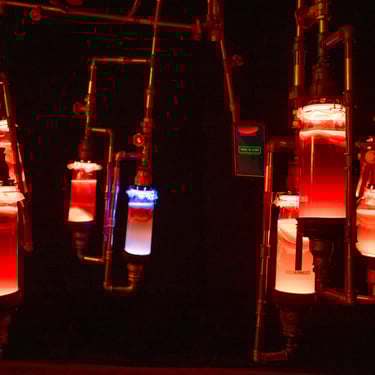
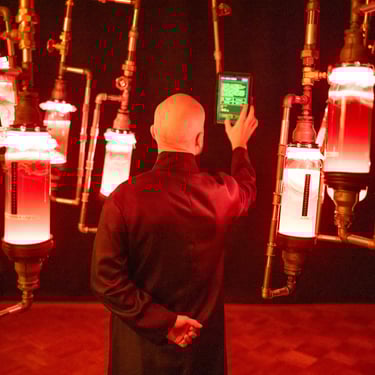
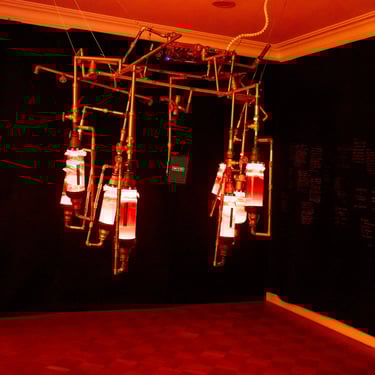
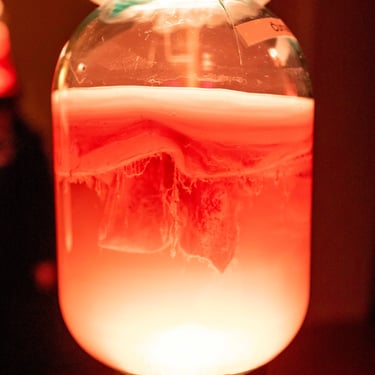
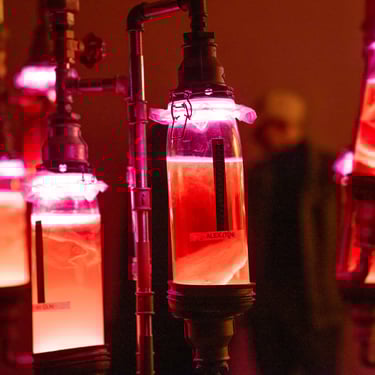
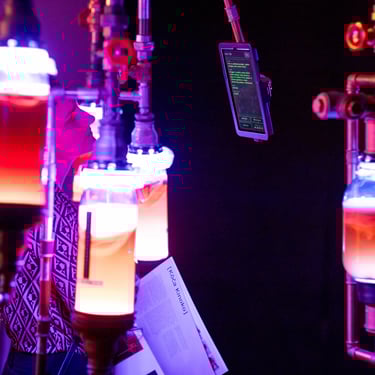
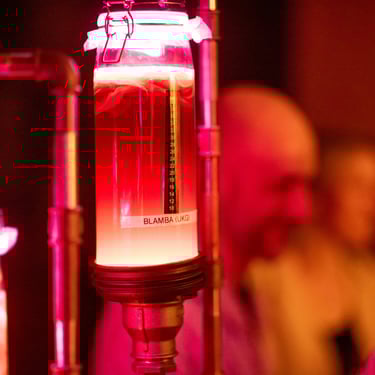
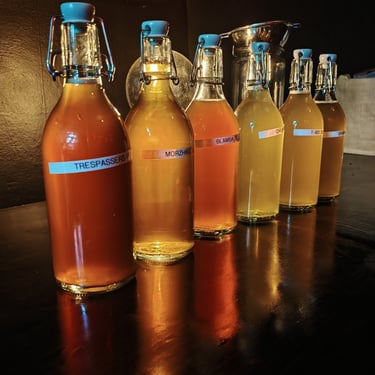
Kōcha Kinoko is a quasi-biological experiment synthesizing an artificial mycelium for isolated SCOBY cultures. By implementing a signaling network, individual samples are integrated into a unified organism. This morphological shift resolves the semantic contradiction of the "tea mushroom", bridging the gap between word and matter.


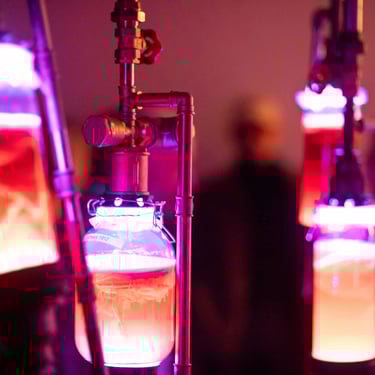
Kōcha Kinoko

· PERFORMANCE · INSTALLATION ·
The entire history of the "tea mushroom" is a sequence of wrong words; for me, it is also a symbol of injustice and solitude. In truth, the tea mushroom is not a mushroom at all, and the word "kombucha" is merely a linguistic mis-borrowing from Japanese. My project, Kocha Kinoko, was born as an experiment, not necessarily to correct these historical errors, but to use this linguistic accident to create a new, quasi-biological culture.
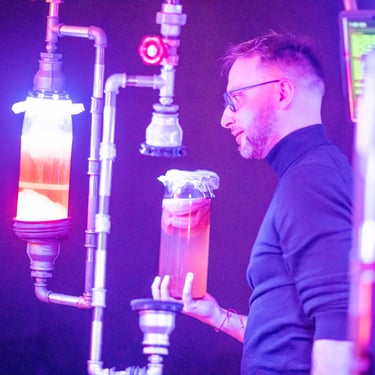
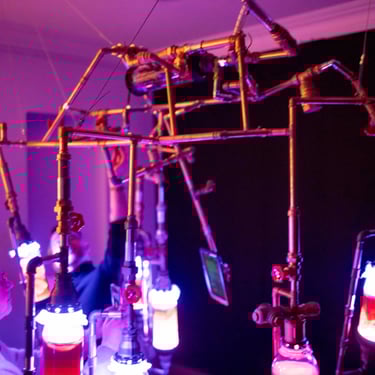
By calling a symbiotic culture a "mushroom" and then isolating it within a glass jar, we contradict ourselves. We create a dangerous semantic precedent at the intersection of many scientific disciplines. A true mushroom is, by definition, part of a larger living organism: the mycelium. For the tea mushroom to truly become a mushroom, we must develop an artificial mycelium–implementing the signaling and transport functions that transform each individual culture into part of a greater living collective: Kocha Kinoko.
The parallels are inescapable: forty years ago, I was told I am Evin. Twenty years ago, I was told I am a man. And all these years, I have been told what I must do. Can we really assume that by calling a symbiotic culture a "mushroom" for hundreds of years, we do not alter its very nature? Can I change the morphology of a subject by altering its environment to match its assigned semantic properties?
What happens if I no longer "must" be anything for anyone? What if I allow my ideas to sprawl like a brass and cast-iron mycelium? If I give the tea mushroom the chance to transcend the limitations imposed upon it from the outside, can I, too, escape the container of my own consciousness–a vessel in which I am condemned to loneliness, just like the tea mushroom?
I chose to create an experiment to bridge the gap between the word and the object it signifies. Since it was clear to me that these names–these defining elements of self-identification–must remain, I decided to change the subject itself. In other words, I decided to turn the tea mushroom into a real mushroom.
By standing at the border between the world of ideas and the physical processes of biology, I aim to demonstrate a vital need: we must finally take responsibility for what we have done best for the last several thousand years – naming everything without ever considering how those names transform the subject.